Brand identity is everything a business deliberately puts out to be recognised: the logo, colours, fonts, imagery, tone of voice and the rules for using them. It's how you want people to see you. If your logo is your signature, your brand identity is your whole wardrobe, voice and handwriting.
"What is brand identity" is one of the most searched branding questions, and most answers online are either academic or vague. Here's the practical version, from someone who designs identities for startups and small businesses.
Brand identity vs brand image vs branding
- Brand identity is what you create and control: visual and verbal elements.
- Brand image is what people actually think of you. Identity is the input; image is the result.
- Branding is the ongoing work of shaping that perception: strategy, identity, messaging and every customer experience.
You can't fully control your brand image, but a clear, consistent identity is the biggest lever you have over it.
Brand identity design: the core elements
A complete visual identity usually includes these parts. Small businesses don't need all of them on day one, but each one you skip is a decision someone will make inconsistently later.
1. Logo system
Not one logo but a set: primary logo, a stacked or horizontal version, an icon or monogram for small spaces, and black, white and colour versions. (Prices for this are in how much a logo costs.)
2. Colour palette
Usually one or two primary brand colours, a few neutrals, and an accent for buttons and highlights, defined with exact values for print (CMYK, Pantone) and screen (HEX, RGB).
3. Typography
A heading font and a body font, with sizes and weights for different uses. Typography does more for recognition than most people expect.
4. Imagery and illustration style
How your photos are shot and edited, whether you use illustrations, and how they look. One consistent treatment makes ordinary images recognisably yours.
5. Graphic elements
Patterns, shapes, icons, borders, textures: the supporting pieces that make layouts feel on-brand even without the logo.
6. Tone of voice
How you write: formal or casual, playful or calm, technical or simple. Voice is part of identity, and inconsistent voice is as obvious as inconsistent colours.
7. Brand guidelines
The document that ties it all together and tells anyone (designers, developers, printers, your future marketing hire) how to use it. More on that in what brand guidelines should include.
A brand identity isn't a logo with extras. It's a system that makes everything you publish look like it came from the same company.
Brand identity examples worth learning from
The best-known identities share one thing: you'd recognise them with the logo covered.
- Coca-Cola: one red, one script, one bottle shape, used consistently for over a century.
- Apple: restraint as identity. Lots of white space, product photography, simple type.
- Mailchimp: a distinctive illustration style and a warm, slightly quirky voice that shows up everywhere.
- Small brands do it too: a local café with one strong colour, hand-drawn menus and a friendly voice can be just as recognisable in its neighbourhood.
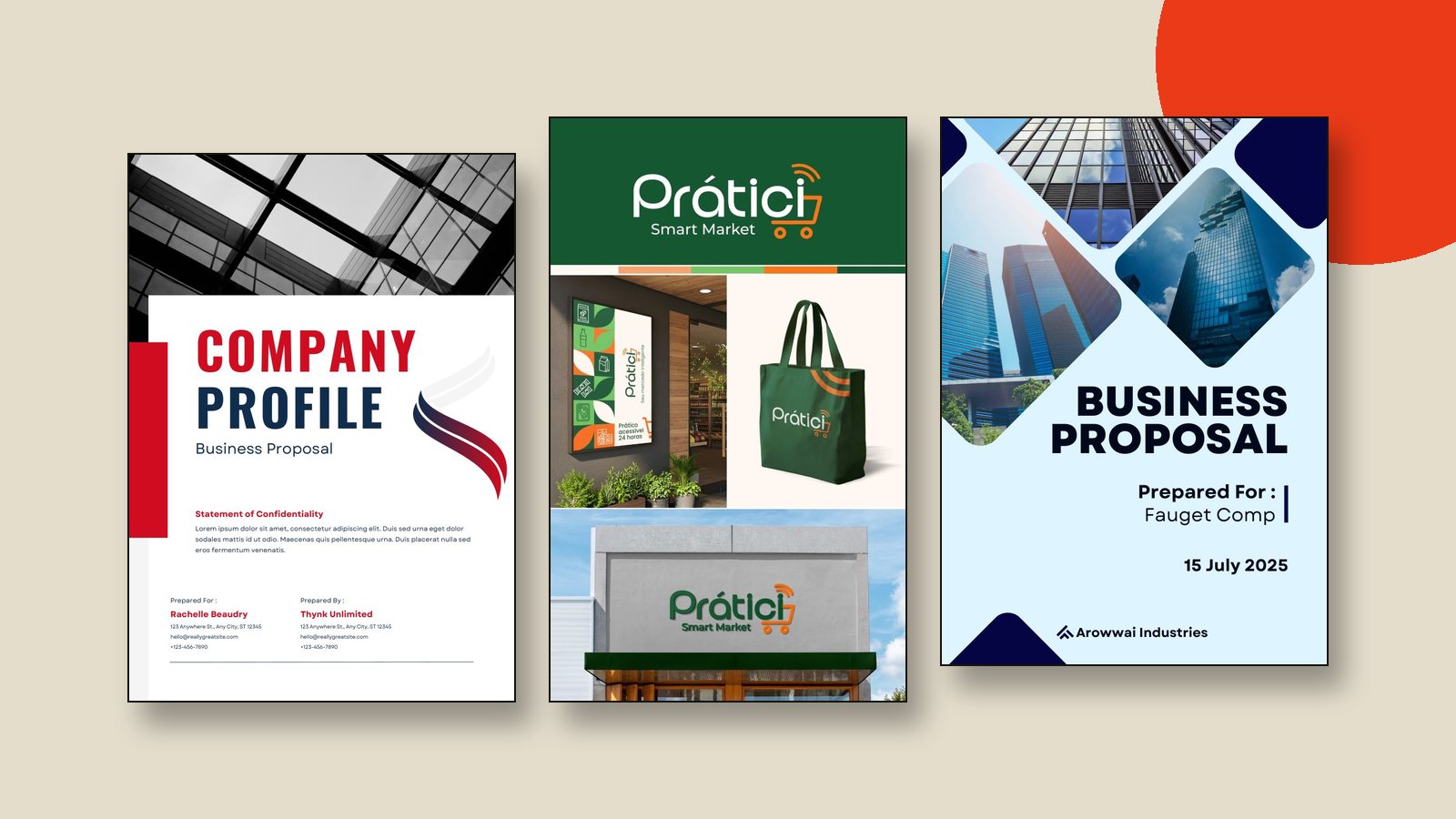
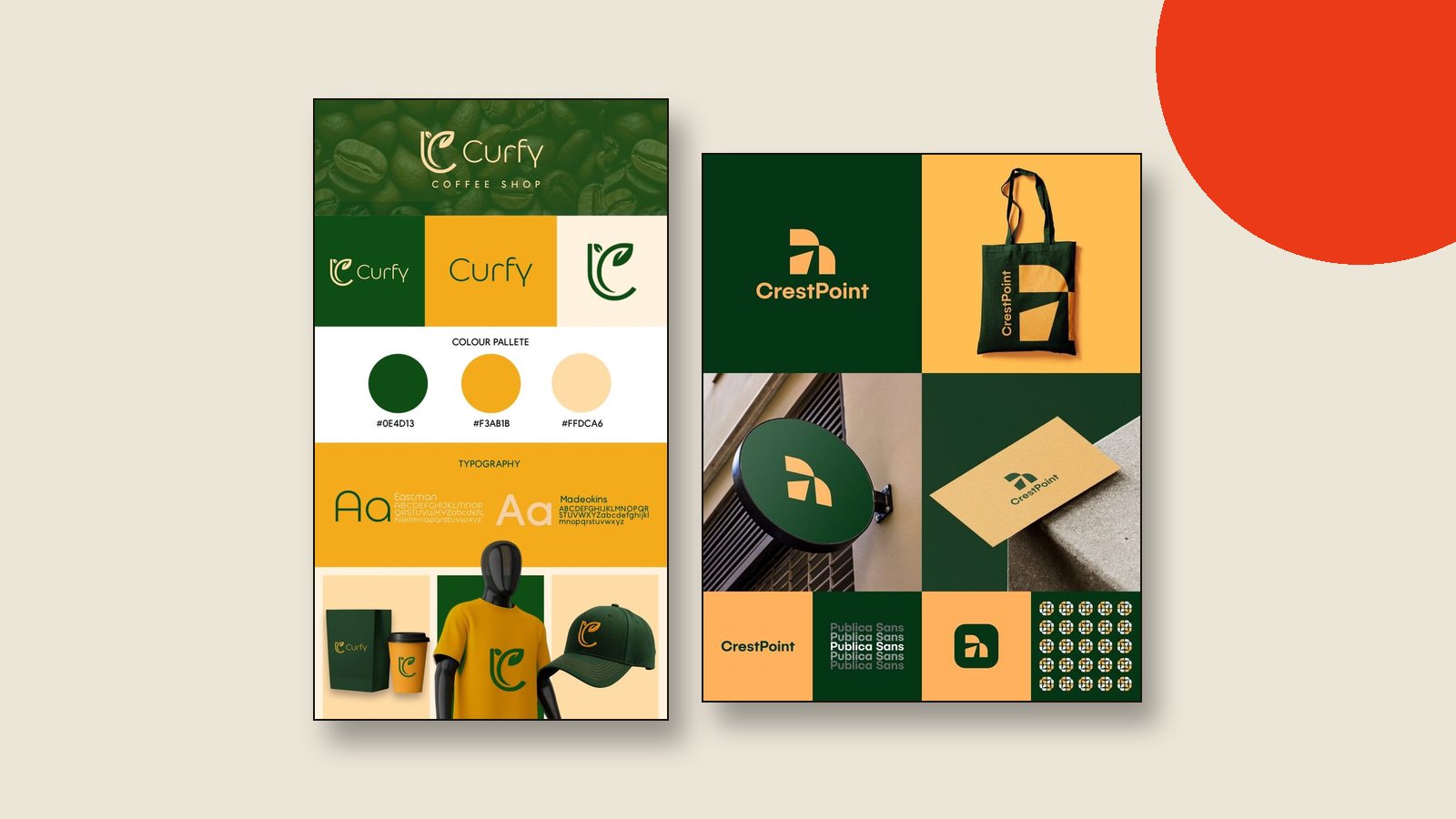
In my own work, like the coffee brand and grocery-store identities on the cover of this article, the goal is the same at a smaller scale: a logo, palette, type and application examples (bags, cups, signage, social posts) that make the brand instantly identifiable. You can see more in my portfolio.
What's in a brand identity package?
When designers sell a "brand identity package", it typically includes:
- Discovery: a questionnaire or workshop about your business, audience and competitors.
- Two or three initial concepts, then refinement of one direction.
- Logo system, colour palette and typography.
- Supporting graphics and image direction.
- Application mockups: business cards, social templates, packaging, signage or website.
- Brand guidelines (a short PDF for small businesses, a full brand book for larger ones).
- All source and export files, with rights transferred to you.
How to create a brand identity: step by step
- Get clear on strategy. Who's your customer, what do you promise them, what makes you different, and what personality fits?
- Audit the competition. Collect competitors' logos, colours and websites in one place. Then deliberately look different.
- Create a mood board of colours, type, imagery and references that match the personality.
- Design the logo system and test it at tiny and huge sizes.
- Choose colours and fonts and check contrast for accessibility.
- Apply it to real items (website, social posts, packaging, a pitch deck) before calling it done.
- Document it in brand guidelines and share them with everyone who makes things for you.
Brand identity checklist
- Logo: primary, secondary, icon, colour / black / white versions
- Colour palette with HEX, RGB, CMYK (and Pantone if printing)
- Heading and body fonts, with licences
- Photography or illustration direction
- Icons, patterns or graphic shapes
- Tone-of-voice notes with do / don't examples
- Templates: social posts, presentation, documents
- Brand guidelines PDF
If your current identity is inconsistent or no longer fits the business, you may be looking at a refresh rather than a full rebuild. My rebranding checklist helps you decide. And if you're early-stage, avoid the branding mistakes that make startups look amateur.
Frequently asked questions
What is brand identity in simple words?
Brand identity is the set of things a business creates to be recognised, such as its logo, colours, fonts, imagery and tone of voice, plus the rules for using them consistently.
What is the difference between brand identity and a logo?
A logo is one element of a brand identity. The identity also includes colours, typography, imagery, graphic elements, tone of voice and guidelines that make everything look and sound consistent.
What are the main elements of brand identity?
The core elements are a logo system, colour palette, typography, imagery or illustration style, graphic elements, tone of voice and brand guidelines.
How much does brand identity design cost?
For small businesses, a brand identity from an experienced freelance designer often costs from around $1,000 to $6,000 depending on scope. Agency identity projects typically start around $5,000 to $10,000 and can go far higher.
How long does it take to create a brand identity?
A focused small-business brand identity usually takes three to six weeks, including discovery, concepts, refinements and guidelines.
Build a brand people remember
I design brand identities for startups and small businesses: logo, colours, type, packaging and guidelines.
Start a project →