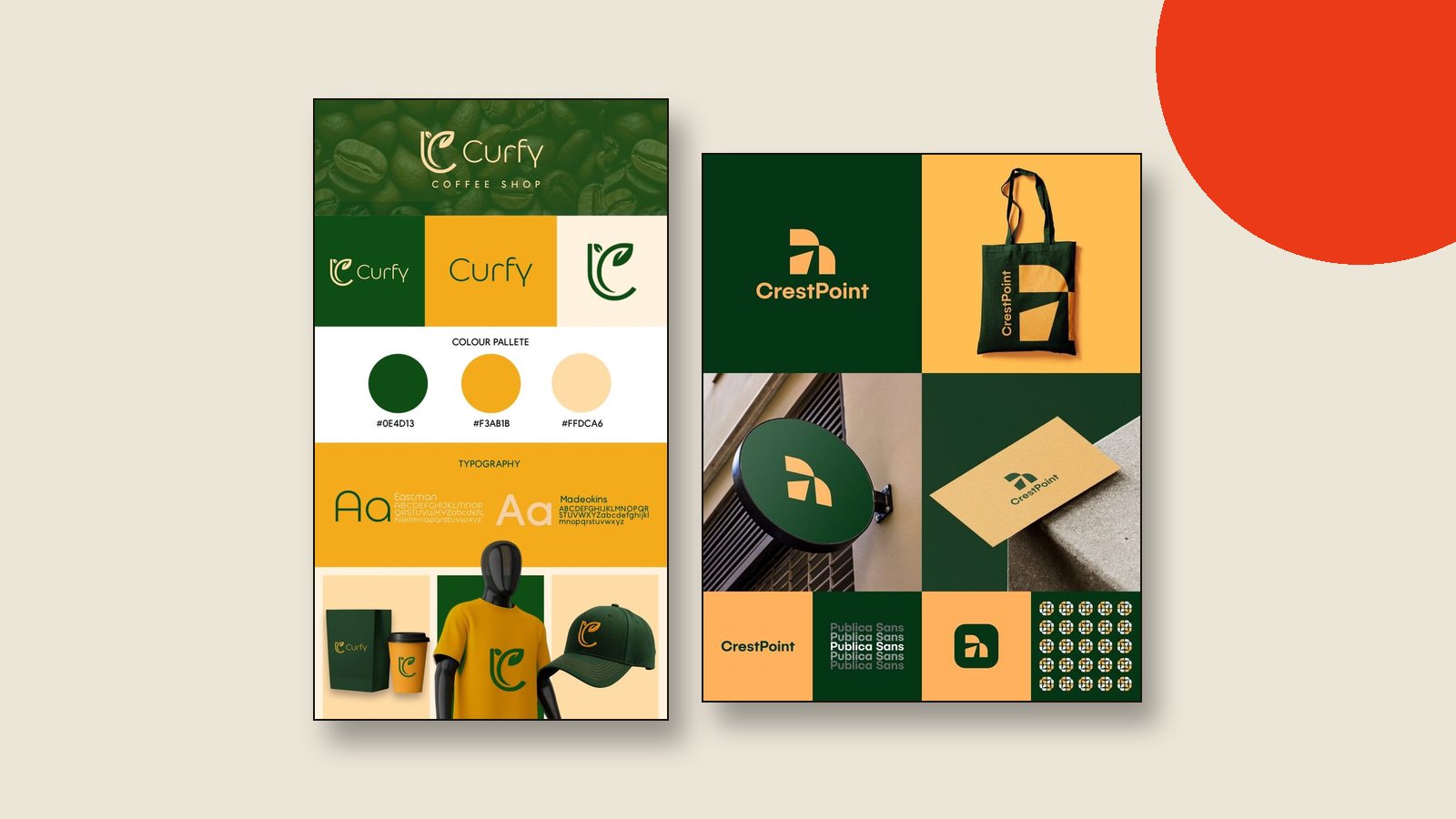
Brand guidelines (also called a brand book or brand style guide) are the rules for how your brand looks and sounds. They tell anyone creating something for you (a designer, developer, printer, agency or new hire) exactly which logo to use, which colours, which fonts, and how to write.
Without them, every new flyer, slide and ad drifts a little further from the original, until your brand looks like five different companies. I write guidelines for every identity I design. Here's what goes in them, as a template you can follow.
Why brand guidelines matter (even for small businesses)
- Consistency builds recognition. People need to see the same look many times before they remember it.
- They save time and money. Freelancers and agencies get up to speed instantly instead of guessing.
- They protect the investment you made in your logo and identity.
- They make you look bigger. Consistent brands read as established brands.
A brand guideline isn't a rulebook to restrict people. It's a shortcut that lets anyone make things that look like you.
What should brand guidelines include? A template outline
Use this as your table of contents. A small business can cover it in 10–20 pages; larger companies go much deeper.
1. Brand overview
A short page on who you are: mission, what you promise customers, your audience, and three to five personality words. This gives every design decision a reason.
2. Logo usage
- All logo versions: primary, secondary, icon, mono.
- Clear space (the minimum empty area around the logo).
- Minimum size for print and screen.
- Which version goes on light, dark and photo backgrounds.
- Logo misuse examples: stretching, recolouring, adding effects, placing on busy images.
3. Colour palette
Each colour with its HEX, RGB, CMYK and, if you print a lot, Pantone values. Show proportions (how much of each colour a typical design uses) and accessible text and background combinations.
4. Typography
Heading and body fonts, where to get them or their licence, fallback fonts for email and Office documents, and a type scale (sizes for headings, subheadings, body and captions).
5. Imagery
Photography style (light or moody, people or product, candid or posed), editing treatment, illustration style if you use one, and examples of images that are on-brand and off-brand.
6. Graphic elements and icons
Patterns, shapes, frames, icon style and how they're used in layouts.
7. Tone of voice
How you write, with practical do and don't examples. "We're friendly, not jokey" is more useful with two sample sentences showing the difference.
8. Applications and templates
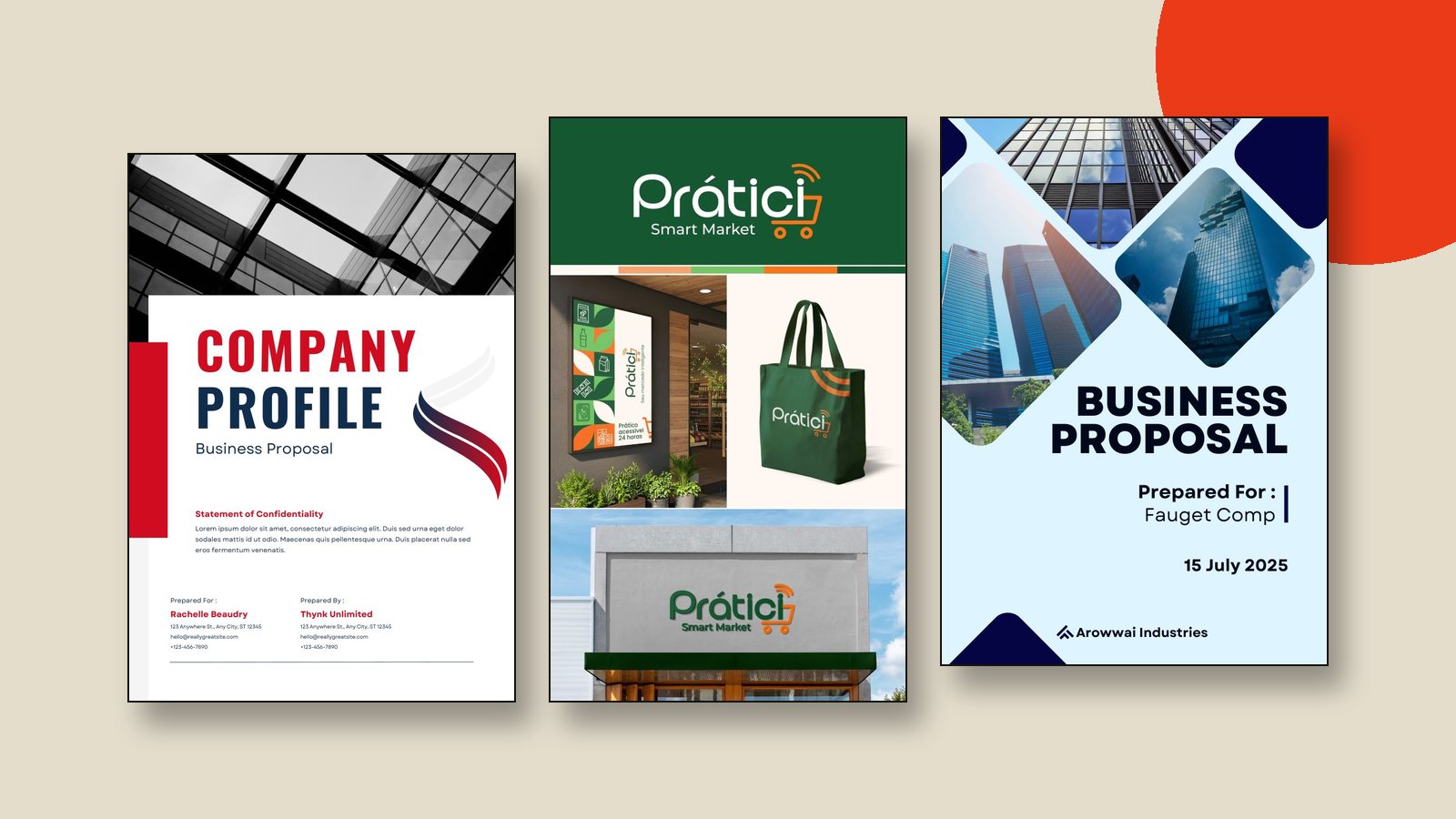
Real examples of the brand in use: business cards, social media posts, email signatures, presentation slides, packaging, signage and website. Link to editable templates where you can. This is the section people use most.
9. Contacts and files
Where to download logo files and templates, and who to ask when something isn't covered.
Bonus: social media and digital rules
Most brand guidelines were written for print and forget where brands now spend most of their time. Add a short page covering profile pictures and cover images, post templates and safe areas, how to use colour and type in stories and reels, video intros or end cards, and accessibility basics such as contrast and captions.
Common brand guideline mistakes
- All theory, no examples. Mission statements without visual rules don't help someone designing a flyer.
- Missing file links. If people can't find the right logo file, they'll screenshot the website.
- No colour codes for print. Screen-only colour values lead to off-brand printing.
- Never updated. Outdated guidelines get ignored, and then everything drifts.
Brand guidelines examples worth looking at
Many large companies publish their guidelines online, and they're great references for structure. Search for the brand guidelines of companies such as Spotify, Slack, Mailchimp or Uber, or look through public collections of brand manuals. Notice how the best ones lead with examples, not paragraphs.
How to make brand guidelines people actually use
- Show, don't tell. Visual examples of right and wrong beat long explanations.
- Keep it short. A 12-page PDF that gets read beats a 90-page book nobody opens.
- Make files easy to find. Put a link to the logo pack and templates on the first page.
- Include templates. Editable social, presentation and document templates enforce the guidelines automatically.
- Update it. Add new examples as the brand grows, and date each version.
Brand guidelines template: PDF, website or Figma?
For most small businesses, a well-designed PDF plus a shared folder of files is enough. Growing teams often move guidelines to a simple web page or a Figma or Notion page so they're always current. Use whatever your team will actually open.
Brand guidelines sit on top of a brand identity, so if you don't have the core elements yet, start with brand identity design. And if your existing guidelines no longer match your business, see when and how to rebrand. You can also apply your guidelines straight away to sales materials; here's how to make a PowerPoint look professional with them.
Frequently asked questions
What should brand guidelines include?
Brand guidelines usually include a brand overview, logo usage and misuse rules, colour palette with exact values, typography, imagery style, graphic elements, tone of voice, real application examples and where to find files.
How long should brand guidelines be?
For a small business, 10 to 20 pages is usually enough. Large organisations may need much longer brand books, but shorter guidelines with clear visual examples are more likely to be used.
What is the difference between brand guidelines and a brand book?
The terms are often used interchangeably. A brand book sometimes includes more about brand story and strategy, while brand guidelines focus on practical rules for using the identity.
Can I make brand guidelines myself?
Yes. Start with a simple document that shows your logo versions, colours, fonts and a few examples of correct use. A designer can help make it clearer and more complete, especially for logo rules and templates.
Do small businesses need brand guidelines?
Yes. Even a one or two page guide keeps your look consistent when you work with different freelancers, printers or staff, which makes a small business look more established.
Need brand guidelines made?
I create brand identities and clear, usable brand guidelines for startups and small businesses.
Get a quote →